Grade 8 · MYP Year 3 · 2026 to 2027
Everything you need, in one place
Three units this year. This is where you check what each one is about and exactly what you have to do to move up a band. If you have ever been given a 5 and wanted a 7, the answer is further down this page.
The verbs, in order
Whichever criterion you are working on, this is the climb. Find the sentence you have written, then try to move it up one level.
Always justify your choices in relation to the impact it has on an audience. If the audience is not in your sentence, you are not at the top band yet.
Your year 3 UNITS · 3 TERMS
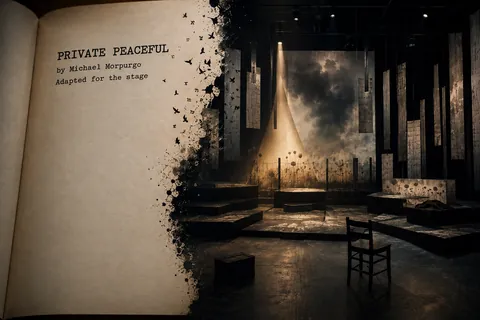
Space, time and physicality are essential elements in shaping and communicating human experience and emotion.
Aesthetics, Communication
Interpretation
Orientation in space and time
B, Developing. C, Performing.
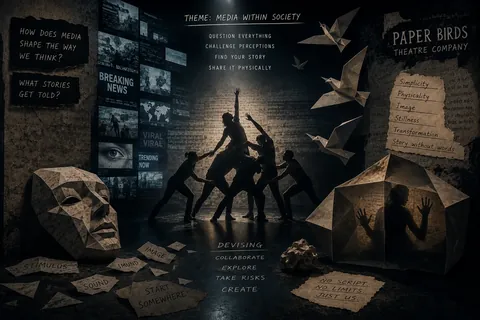
The arts have the power to reshape our world and the way we perceive it, opening our minds to new possibilities and perspectives.
Communication, Change
Structure, Audience, Perspective
Personal and cultural expression
All four. A, B, C and D.
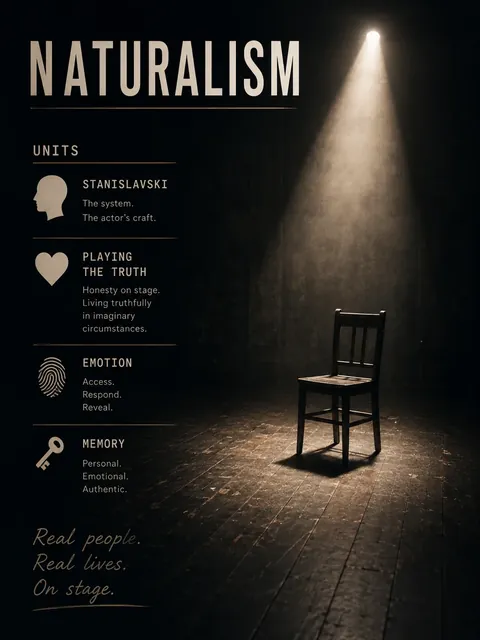
Communication combines verbal and non-verbal elements to express emotions and develop relationships in theatre.
Communication
Role, Interpretation, Expression
Identities and relationships
B, Developing. C, Performing.
What is a Statement of Inquiry?
Every unit has a Statement of Inquiry. You’ll see it at the top of the unit. It’s not just something you copy into your journal and forget about. It tells you what the unit is really asking you to explore.
Your performance, your rehearsal choices and your journal should all connect back to it. When you make a choice, you should be able to explain how it connects to the Statement of Inquiry.
If you can’t make that connection, you may be doing good work, but it isn’t necessarily answering the question the unit is asking.
What do all the other words mean?
The key concept and related concept are the big ideas we are exploring. The global context gives us the particular angle we are looking at those ideas from.
You don’t need to just repeat these words because they are on the page. You need to use them to show what you are thinking about.
For example, if the related concept is Interpretation, your work should show that you are thinking about interpretation and you should use that word when it genuinely fits what you are saying. For example:
“We chose to use just one red book throughout the performance, but changed its meaning in each scene. This allowed the audience to interpret the book differently each time and helped us represent the different forms of media we consume every day.”
Four criteria · max 8 each
How you are marked
A 5 is not a 7 with less effort in it. The bands are not a scale of how hard you tried. Each band asks for a different kind of thinking. Moving up means changing what you do, not doing more of the same. More writing will not move you up. A different kind of sentence will.
Why you are a 5 and not a 7
At 5 to 6, you can explain what you did and why.
At 7 to 8, you go further. You explain what you did, how you did it, why you chose it, what it did to the audience and how it helped you explore the Statement of Inquiry.
You need to be specific
Name the technique or decision you made. Explain what you actually did with it. Explain why you chose it and what you wanted it to achieve. Then think about the audience. What did they see, hear, think or feel because of your choice?
Finally, think about the bigger idea. How did this choice help you explore the Statement of Inquiry?
You can also say when something didn’t work. This can make your evaluation stronger because you are showing that you have thought about your work honestly rather than just saying everything was successful.
For a 7 to 8, think:
- WHATdid I do?
- HOWdid I do it?
- WHYdid I choose it?
- AUDIENCEWhat did it make them think, feel or notice?
- SOIHow did this help me explore the Statement of Inquiry?
You don’t have to write “This links to the Statement of Inquiry…” every time. Show the connection through what you say.
The same point, written twice
The full worked version of this is on the Unit 2 page.
“We used repetition in our performance to show how people see the same news stories again and again.”
“We used repetition by having the same news report played several times, but changing one detail each time. We chose this because we wanted to show how information can gradually become distorted. For the audience, this was designed to make them question whether what they were watching was actually reliable.”
What makes an answer strong?
A weak answer can sound good but still tell us very little.
“Our performance was successful because we worked well as a group and used techniques effectively.”
The problem is that there is nothing specific to prove or explain.
A strong answer gives evidence. It tells us what you actually did, why you made that choice, what happened when you performed it and what you learned from it.
“We used repetition to show how the same news story can become more believable when people keep hearing it. When we first performed it, the repetition went on too long, so we cut it down. This made the idea clearer for the audience.”
The example above and the mark bands below are written using the Term 2 devised unit, because that is the unit that uses all four criteria. The wording changes from unit to unit. The thinking behind it does not.
The mark bands, in the words that matter
| Band | What this means in your work |
|---|---|
| 1 to 2 | I know some basic things. I can give a few facts about the company, techniques or my chosen media issue, but my research is quite limited. I might mention a technique without really explaining it or connecting it to my own performance. |
| 3 to 4 | I can explain what I found out. I can give relevant information about the company and the techniques I learned. I can explain some of what I did in my own performance, but I don't always explain why I made those choices or what effect they had. I may make a simple connection to the Statement of Inquiry. |
| 5 to 6 | I can explain my choices clearly. I can describe the techniques I used and explain how I used them in my own performance. I can explain why I made some of my choices and what I wanted them to do. I can make clear links to my chosen media issue and the Statement of Inquiry. |
| 7 to 8 | I can explain, justify and analyse my choices. I can take a specific technique or decision, explain how I used it, why I chose it and what I wanted the audience to think, feel or notice because of it. I can explain how my choices helped me explore the Statement of Inquiry and connect this to my research and the development of my own performance. My research is detailed and properly sourced. |
Below, the same four criteria broken down one at a time, with the official wording next to what it actually asks of you.
Investigating
Assessed in Unit 2, Devised. Marked out of 8.
What this criterion asks you to do- Investigate a movement or genre in your chosen arts discipline, related to the statement of inquiry.
- Analyse an artwork or performance from that movement or genre.
| Band | What the criterion says | What that sounds like in your own words |
|---|---|---|
| 1 to 2 | Provides limited information not always related to the SOI. Identifies features of an artwork including two from elements, techniques or context. | “I can give some basic facts about The Paper Birds and the issue I have chosen to investigate in relation to media and society, but my research is quite limited and isn’t always connected to the SOI.” |
| 3 to 4 | Provides mostly relevant information related to the SOI. Outlines features of an artwork including two from elements, techniques or context. | “I can explain some of The Paper Birds’ techniques and the issue I have chosen to explore in relation to media and society. I make some links to the SOI, but my analysis is limited.” |
| 5 to 6 | Provides relevant information related to the SOI. Describes features of an artwork including elements, techniques and context. | “I can clearly describe The Paper Birds’ techniques and explain how they use things like verbatim and physicality to communicate an issue relating to media and society.” |
| 7 to 8 | Provides comprehensive, relevant information related to the SOI. Analyses features of an artwork including elements, techniques and context. | “I can analyse The Paper Birds’ work in detail. I explain why they use particular techniques, what effect they have on the audience and how their work connects to the issue I have chosen to explore. I also make clear links to my own devised work. My research is thorough and properly sourced.” |
The difference is what you do with the information.
At 5 to 6, you can explain what The Paper Birds do and how their techniques communicate an issue relating to media and society.
At 7 to 8, you need to go further and explain why they make those choices, what they achieve for the audience and what you have taken from them when developing your own work.
So instead of:
The Paper Birds use verbatim theatre to explore fake news.
You need to move towards:
The Paper Birds use verbatim theatre because using real words can make the issue feel more immediate and believable for the audience. This influenced my decision to use real social media comments in my own piece.
That distinction is much closer to what the criterion is actually asking for.
- Research
- Analysis
- Your chosen issue
- Your own work
Developing
Assessed in all three units. Marked out of 8.
What this criterion asks you to do- Practically explore ideas to inform development of a final artwork or performance.
- Present a clear artistic intention for the final artwork or performance in line with the statement of inquiry.
| Band | What the criterion says | What that sounds like in your own words |
|---|---|---|
| 1 to 2 | Demonstrates limited practical exploration. Presents a clear artistic intention and states artistic choices. | “I try a few ideas but don’t develop them very far. I can say what I chose, but I don’t explain my reasons very clearly.” |
| 3 to 4 | Demonstrates sufficient practical exploration. Presents a clear artistic intention in line with the SOI and states artistic choices. | “I experiment with different performance ideas such as space, choral voice, tempo and production elements. I can describe the choices I make.” |
| 5 to 6 | Demonstrates substantial practical exploration. Presents a clear artistic intention in line with the SOI and describes artistic choices. | “I explore my ideas in more depth and develop them using feedback. I can describe my choices and explain some of the reasons behind them.” |
| 7 to 8 | Demonstrates extensive and varied practical exploration. Presents a clear artistic intention in line with the SOI and explains artistic choices. | “I explore a wide range of different ideas and keep developing and refining them. I explain why I make particular choices and how they create meaning for the audience.” |
Substantial becomes extensive and varied. At 5 to 6, you develop your ideas and explore them in some depth. At 7 to 8, you need to show a wider range of ideas and possibilities, including ideas you tried but decided not to use. Your journal should show that process.
There is also a difference between describing and explaining. At 5 to 6, you can describe the choices you made. At 7 to 8, you explain why you made them and what they communicate to the audience.
It is not just about having a good final idea. Show how you got there and why your choices matter.
Performing
Assessed in all three units. Marked out of 8.
What this criterion asks you to do- Create or perform an artwork.
| Band | What the criterion says | What that sounds like in your own words |
|---|---|---|
| 1 to 2 | Demonstrates limited skills and techniques through the creation or performance of a finalized work. | “My performance shows limited use of space, physicality or voice. I struggle to communicate meaning to the audience.” |
| 3 to 4 | Demonstrates satisfactory use of skills and techniques through the creation or performance of a finalized work. | “I use space and physicality at times with some vocal variety. I communicate basic intention but lack consistency.” |
| 5 to 6 | Demonstrates mostly effective use of skills and techniques through the creation or performance of a finalized work. | “I use space, physicality and choral voice effectively to build atmosphere and tension with clear intention.” |
| 7 to 8 | Demonstrates consistently effective use of skills and techniques through the creation or performance of a finalized work. | “I use space imaginatively to create layers of meaning. My physicality and choral voice help create a unified ensemble.” |
Mostly effective becomes consistently effective. This is the one people lose. A strong opening and a vague middle is 5 to 6. The examiner is watching the transitions, the moments you are not speaking and the seconds before the lights go down.
Evaluating
Assessed in Unit 2, Devised. Marked out of 8.
What this criterion asks you to do- Appraise your own artwork or performance.
- Reflect on your development as an artist.
| Band | What the criterion says | What that sounds like in your own words |
|---|---|---|
| 1 to 2 | Outlines some elements of their work. Identifies aspects of development. | “My reflection outlines what happened rather than evaluating it.” |
| 3 to 4 | Describes their work. Outlines development as an artist. | “I explore some techniques and describe how ideas developed. I can state choices and outline what I learnt as an artist.” |
| 5 to 6 | Analyses their work. Describes development as an artist. | “I explore in depth, describe my artistic choices and analyse what worked. I describe my development as an artist.” |
| 7 to 8 | Evaluates their work. Analyses development as an artist. | “I justify every devising choice and evaluate the impact of the final piece. I analyse my growth as an artist throughout the unit.” |
Analyse becomes evaluate. Analysing is saying what happened and why. Evaluating is making a judgement and standing behind it: this worked, that did not, here is the evidence and here is what I would change. Naming a weakness honestly scores higher than claiming everything went well.